While “no worries” is a perfectly fine and friendly phrase, sometimes you need something with a bit more precision or a different tone. Using the same reply over and over can feel a little robotic. Choosing the right words can help you sound more sincere, empathetic, or professional, depending on the situation. This article gives you 30 alternatives to “no worries” so you can respond perfectly whether you’re talking to a friend, a colleague, or a client.
First, here is the complete list of alternatives we’ll be covering.
The 30 Alternatives
- It’s all good.
- Don’t even worry about it.
- Thanks for letting me know.
- It happens.
- No harm done.
- Think nothing of it.
- I appreciate the heads-up.
- We’ll figure it out.
- That’s what teammates are for.
- Water under the bridge.
- My pleasure.
- Happy to help.
- Of course.
- Anytime.
- You’re very welcome.
- It was nothing.
- I’m glad I could help.
- You would’ve done the same for me.
- Certainly.
- Don’t mention it.
- Not a problem.
- It’s not a big deal.
- You’re all set.
- I understand.
- No need to apologize.
- Rest assured.
- That’s perfectly fine.
- I’ve got it covered.
- It’s the least I could do.
- You got it.
When to Use Each Alternative
Here’s a closer look at each phrase, what it really means, and the best time to use it.
Casual and Friendly Replies
These are great for friends, family, and close colleagues in informal settings.
1. It’s all good. This is a relaxed way to signal that everything is fine and there are no hard feelings. It’s warm and modern, perfect for when a friend is a few minutes late or makes a very minor slip up.
For example: “Sorry I’m late, traffic was crazy.” / “It’s all good, we just started.”
2. Don’t even worry about it. Use this when you want to strongly reassure someone who seems genuinely stressed about a small mistake. The word “even” tells them the issue is so minor it doesn’t need a second thought.
For example: “I am so sorry I forgot to send you that link.” / “Don’t even worry about it, I found it myself.”
3. It happens. This phrase shows empathy and understanding. It says, “We all make mistakes, it’s a normal part of life.” It’s a great way to normalize a common error and make someone feel less like they failed.
For example: “I can’t believe I forgot to attach the file.” / “It happens. Just send it over when you get a chance.”

4. Water under the bridge. This classic idiom is for forgiving and forgetting a past issue, usually one that was a bit more significant but is now resolved. It clearly signals that you’re ready to move on without holding a grudge.
For example: “I’m still sorry about that disagreement we had last month.” / “That’s all water under the bridge.”
5. Anytime. This is a friendly and open invitation for someone to ask for your help again. It’s a casual way to let friends and close colleagues know that your support is always available.
For example: “Thanks for the ride!” / “Anytime.”
6. It was nothing. This is a humble response to thanks, suggesting that what you did was easy for you. It’s best used for small favors so you don’t accidentally devalue a significant effort.
For example: “Thanks for grabbing me a coffee.” / “It was nothing.”
7. It’s not a big deal. This phrase actively downplays the importance of an issue. It’s a casual way to tell a peer not to overthink a small mistake or feel overly grateful for a small favor.
For example: “I’m so sorry, I spilled a little coffee.” / “It’s not a big deal, I’ll grab a napkin.”
8. You got it. This is a cool, confident, and casual acknowledgment. It can mean “you’re welcome” or “I’ll take care of it.” It’s a quick and easy reply for informal chats with friends.
For example: “Thanks for grabbing that for me.” / “You got it.”
For even more ways to use this specific phrase, check out our other guide on ways to say “you got it.”
Professional and Polite Replies
These work well in the office, with clients, or in any situation that calls for a bit more formality.
9. Thanks for letting me know. This is a fantastic professional response. It shifts the focus from the error to the person’s integrity in reporting it. It encourages open communication and turns a negative into a positive.
For example: “I have to admit, I made a mistake on the spreadsheet.” / “Thanks for letting me know. Let’s fix it.”
10. No harm done. This is a practical and direct reassurance. It confirms that a mistake, while acknowledged, had no negative consequences. It’s great for when an error was caught early.
For example: “Sorry, I accidentally sent the draft to the wrong person.” / “No harm done, I already cleared it up.”
11. Think nothing of it. This is a slightly more formal and gracious way to dismiss an apology. It suggests the issue was so insignificant that it doesn’t warrant their concern. It has a touch of classic charm.
For example: “I’m sorry for the noise during your meeting.” / “Think nothing of it.”
12. I appreciate the heads-up. Similar to “thanks for letting me know,” this phrase values the warning. It shows you’re proactive and see the other person as part of the solution, not the problem.
For example: “Just so you know, the client is running 15 minutes late.” / “I appreciate the heads-up.”
13. We’ll figure it out. This response is all about teamwork and solutions. It acknowledges a problem but immediately focuses on finding a fix together, which builds partnership and reduces stress.
For example: “I’m so sorry, my error might have delayed the timeline.” / “Don’t worry. We’ll figure it out together.”
14. That’s what teammates are for. Use this after you’ve helped a colleague who is thanking you or apologizing. It reinforces that mutual support is expected and valued, focusing on the relationship rather than the mistake.
For example: “I really appreciate you helping me fix that.” / “That’s what teammates are for.”
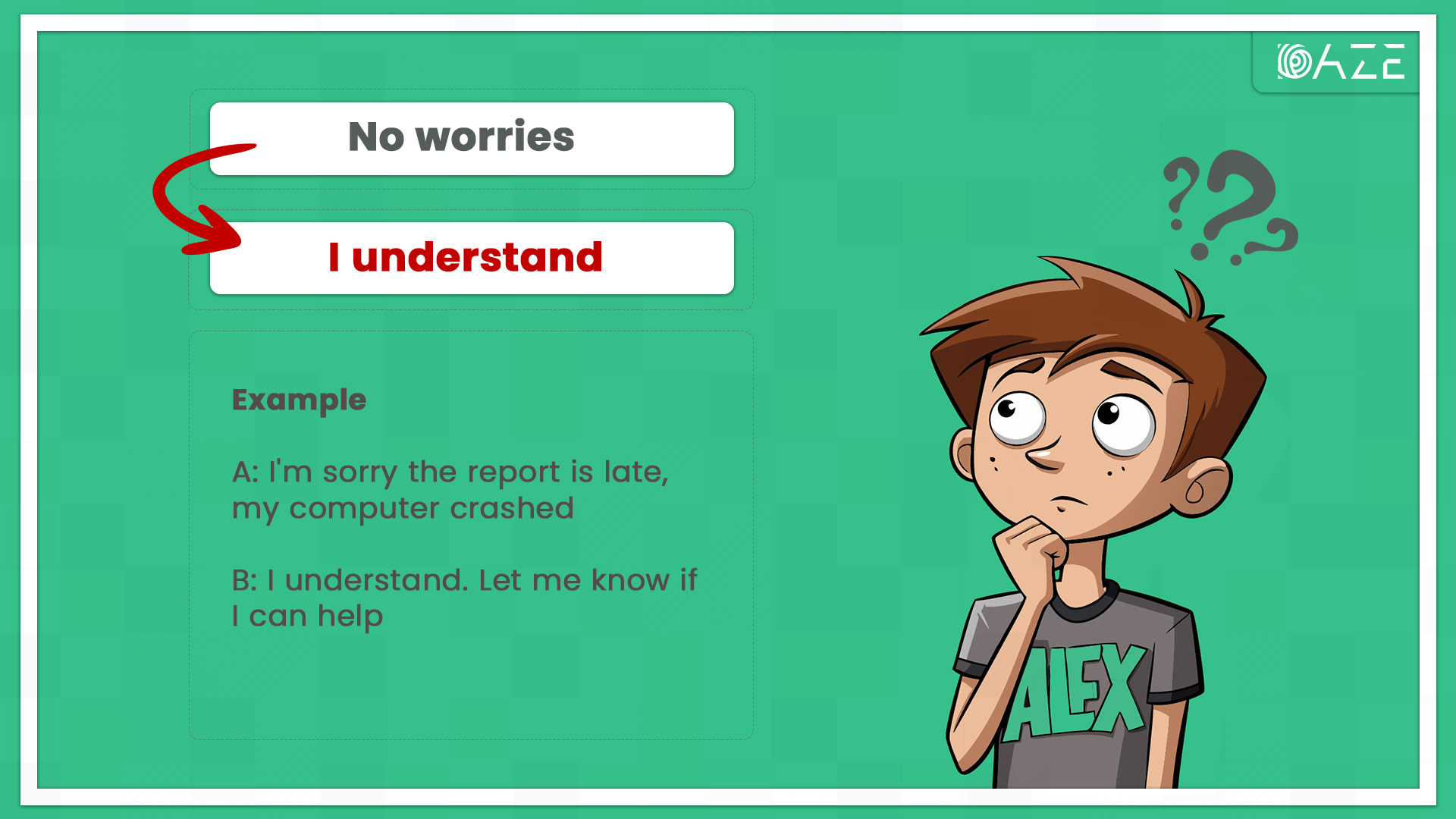
15. I understand. This is a powerful and empathetic response to an apology. It doesn’t just dismiss the issue; it validates the other person’s perspective. It shows you are listening.
For example: “I’m sorry the report is late, my computer crashed.” / “I understand. Let me know if I can help.”
16. No need to apologize. This directly lifts the burden of an apology. Use it when someone says sorry for something you feel was completely fine, like asking a question.
For example: “I’m sorry, I have another question.” / “No need to apologize, that’s what this meeting is for.”
17. Rest assured. This is a very formal and confident way to reassure someone. It’s a strong statement that you have the situation under control, perfect for calming a concerned client or manager.
For example: “I’m worried we won’t meet the deadline.” / “Rest assured, we are on track.”
18. That’s perfectly fine. Adding “perfectly” makes this a very clear and unambiguous statement of acceptance. It leaves no room for doubt that you are okay with the situation, like when someone needs to reschedule.
For example: “I’m so sorry, I’ll need to leave 10 minutes early today.” / “That’s perfectly fine.”
19. I’ve got it covered. This is a statement of capability and control. It reassures a teammate that you have already taken ownership of a task or solution.
For example: “Oh no, I forgot to book the conference room!” / “I’ve got it covered, I did it this morning.”
Warm Replies to “Thank You”
These phrases add a layer of sincerity when someone expresses gratitude.
20. My pleasure. This is a warm and gracious response that suggests you genuinely enjoyed helping. It frames the act as a satisfaction, not a chore, and feels more personal than “you’re welcome.”
For example: “Thank you for explaining that to me.” / “My pleasure.”
21. Happy to help. This is a cheerful and proactive response that conveys enthusiasm. It’s friendly and builds a positive rapport, great for team environments or customer service.
For example: “Thanks for sending those documents so quickly!” / “Happy to help!”

22. Of course. This implies that helping was a natural and expected thing to do. It says, “Of course I would help you,” which can make the other person feel that their request was perfectly reasonable.
For example: “Thank you for covering for me.” / “Of course.”
23. You’re very welcome. A true classic. Adding “very” gives it a layer of sincerity that “you’re welcome” can sometimes lack. It’s polite, clear, and always a safe and respectful choice.
For example: “Thank you for the thoughtful gift.” / “You’re very welcome.”
24. I’m glad I could help. This response focuses on the positive outcome. It shows your satisfaction comes from the fact that your action made a real difference to the other person.
For example: “Thank you so much, your advice really worked.” / “I’m glad I could help.”
25. You would’ve done the same for me. This is a powerful statement of mutual respect and partnership. It’s best used with a trusted colleague or friend after you’ve provided significant help.
For example: “I can’t thank you enough for helping me prepare.” / “You would’ve done the same for me.”
26. Certainly. This is a crisp, confident, and professional response to thanks. It’s similar to “of course” but carries a slightly more formal, service oriented tone.
For example: “Could you send me the invoice, please?” / “Certainly.”
27. Don’t mention it. This polite, classic phrase suggests the act of helping was so minor it doesn’t need to be thanked. It’s a humble and gracious response for small, everyday courtesies.
For example: “Thanks for saving my seat.” / “Don’t mention it.”
28. Not a problem. A versatile and straightforward alternative that works for both apologies and thanks. It directly dismisses the concern that the situation might have been a problem.
For example: “Sorry, I need to reschedule.” / “Not a problem, let me know what time works.”
29. You’re all set. This is a helpful, solution oriented phrase. It’s often used after you’ve already fixed the issue, signaling completion and reassurance.
For example: “Thank you for resetting my password.” / “You’re all set.”
30. It’s the least I could do. This is a humble and gracious response to thanks for a significant favor. It implies the help you gave was a small gesture compared to your appreciation for the person.
For example: “Thank you for your support during this tough time.” / “It’s the least I could do.”