
Alex stared at his screen, the chat window with his colleague Sarah still open. He’d just seen her status turn to “overwhelmed,” and he tried to help. “Just take it easy,” he wrote. “It’s just a presentation.” He meant to be comforting, but the response he got was a single, curt “k.” The conversation went cold. Alex felt a familiar pang of frustration. Why did a phrase meant to be reassuring so often fall flat, making him sound like he was dismissing her stress? He wasn’t telling her to slack off, but it clearly came across that way. There had to be a better way to show support without sounding so generic.
Finding the right words to express encouragement can significantly enhance communication in both professional and personal settings. Phrasing things with precision shows a clear understanding and can lead to more effective collaboration and stronger relationships. Instead of simply saying “Take it easy,” you can use a variety of alternatives that carry the same core meaning but feel more specific, nuanced, and insightful. Here are 30 thoughtful ways to convey this sentiment, with examples that apply to a wide range of situations.
What Does “Take it easy” Mean?
“Take it easy” is a common phrase used to advise someone to relax, calm down, or not work too hard. It implies that the speaker wants the other person to reduce their stress, effort, or emotional intensity. While it’s a useful and universal expression, its broadness can sometimes fail to capture the specific context or depth of feeling involved.
Is It Professional/Polite to Say “Take it easy”?
Absolutely. In most settings, saying “Take it easy” is perfectly polite and standard. It clearly communicates the intended message without ambiguity. However, in certain contexts, using a more specific synonym can demonstrate a stronger command of language, provide clearer insight into your feelings, and make your message more memorable and impactful.
Advantages and Disadvantages of Saying “Take it easy”
Advantage:
- It is a universally understood phrase that is safe for any context.
- It is concise and direct.
- It is a respectful and standard social convention.
Disadvantage:
- It can sound generic or cliché due to overuse.
- It may not convey the full depth of your emotion or empathy.
- It can sometimes be interpreted as dismissive of someone’s hard work or stress.
30 Alternatives to “Take it easy”
1. “Go easy on yourself.”
- Explanation & Nuance: This phrase is gentle and empathetic. It suggests that the person might be their own harshest critic and gives them permission to be less demanding of themselves. It conveys care and understanding for their internal pressure.
- When to Use? Perfect for a colleague who is blaming themselves for a minor mistake or a friend who is feeling overwhelmed by personal goals.
- Tone: Empathetic, gentle, supportive.
- Example: “I know the report wasn’t perfect, but you did your best with a tight deadline. Go easy on yourself.”
2. “Get some rest.”
- Explanation & Nuance: This is a practical and caring alternative focused on physical and mental recovery. It shifts the focus from simply “relaxing” to the tangible action of resting, which often feels more concrete and actionable.
- When to Use? Use it when you know someone has been working long hours or seems physically exhausted. It’s great for both professional and personal contexts.
- Tone: Caring, practical, direct.
- Example: “You’ve been at the office until 10 PM all week. Please, go home and get some rest.”
3. “Don’t overdo it.”
- Explanation & Nuance: This phrase is a friendly warning against burnout. It acknowledges the person’s hard work but advises them to keep their efforts at a sustainable level. It shows you respect their dedication but are concerned about their well being.
- When to Use? Ideal for someone taking on a lot of tasks or working with high intensity on a project.
- Tone: Concerned, friendly, cautionary.
- Example: “I know you want to get the project launched ahead of schedule, but don’t overdo it. Your health is more important.”
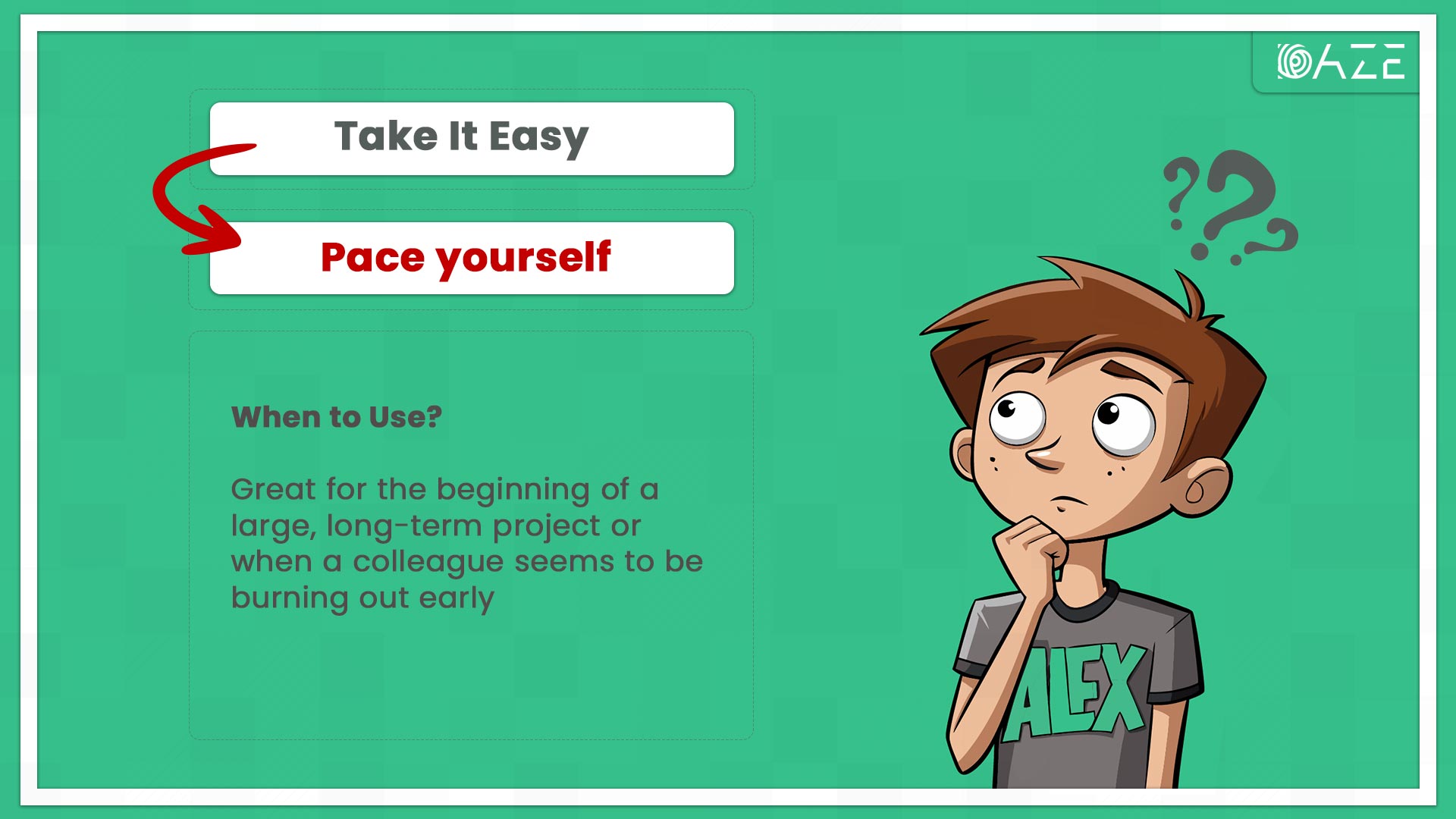
4. “Pace yourself.”
- Explanation & Nuance: This alternative is strategic and encouraging. It’s not about stopping work, but about managing energy for the long haul. It implies that the task is a marathon, not a sprint, and that consistent, measured effort is the key to success.
- When to Use? Great for the beginning of a large, long term project or when a colleague seems to be burning out early.
- Tone: Strategic, encouraging, wise.
- Example: “This is a three month project, so remember to pace yourself. We need you for the final push.”
5. “Relax and recharge.”
- Explanation & Nuance: This phrase is positive and focuses on the benefits of taking a break. “Recharge” adds a modern, productive spin, suggesting that resting is a necessary step to regain energy and effectiveness.
- When to Use? Best used before a weekend or a holiday, or when encouraging someone to take a necessary break.
- Tone: Positive, modern, encouraging.
- Example: “You have the weekend off. I hope you can relax and recharge before we kick off the next phase.”
6. “Be gentle with yourself.”
- Explanation & Nuance: This is a deeply kind and compassionate phrase. It’s similar to “go easy on yourself” but feels even more personal and soft. It’s perfect for situations where someone is emotionally vulnerable or self critical.
- When to Use? Use this with a close colleague or friend who is going through a tough time personally or professionally.
- Tone: Compassionate, gentle, nurturing.
- Example: “It’s okay to feel disappointed after that setback. Be gentle with yourself today.”
7. “Don’t burn yourself out.”
- Explanation & Nuance: This is a direct and impactful warning. The imagery of “burning out” is strong and communicates a serious concern for the person’s long term health and ability to function.
- When to Use? Appropriate when you see a pattern of overwork that seems unsustainable and potentially harmful.
- Tone: Direct, concerned, urgent.
- Example: “Working every weekend isn’t a long term solution. You have to be careful not to burn yourself out.”
8. “Take a deep breath.”
- Explanation & Nuance: This is an in the moment instruction to help someone manage acute stress or panic. It’s a simple, physical action that can have an immediate calming effect. It shows you are present with them in their moment of anxiety.
- When to Use? Right before a high stakes presentation, after receiving stressful news, or during a tense meeting.
- Tone: Calming, immediate, supportive.
- Example: “Okay, the client just threw us a curveball. Let’s all just take a deep breath and think about our response.”
9. “Slow down a bit.”
- Explanation & Nuance: A gentle and informal suggestion to reduce speed or intensity. It’s less of a command and more of a friendly piece of advice. It implies that the current pace is a little too fast for the situation.
- When to Use? When a colleague is rushing through their work and might be missing details, or when a friend is talking very quickly out of excitement or nervousness.
- Tone: Gentle, informal, observant.
- Example: “You’ve got five great ideas there. Slow down a bit and walk me through the first one.”
10. “Remember to take breaks.”
- Explanation & Nuance: This is practical, helpful advice that promotes healthy work habits. It shows that you value well being as a part of productivity. It’s a supportive reminder rather than a command to stop working.
- When to Use? A great message to send to your team during a particularly busy period or to a colleague who is known for working for hours without stopping.
- Tone: Supportive, practical, caring.
- Example: “This is a complex task. Remember to take breaks to keep your mind fresh.”
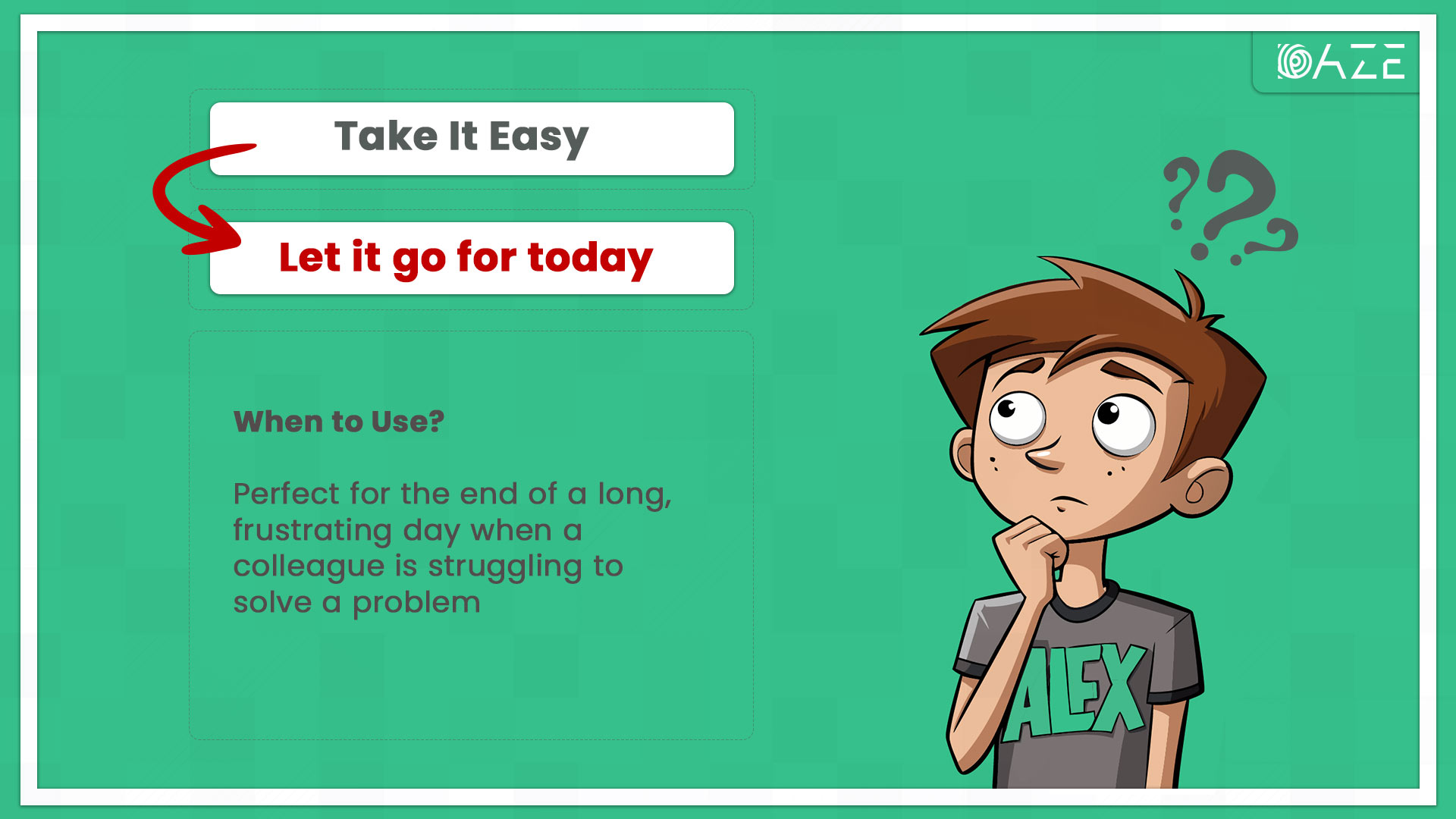
11. “Let it go for today.”
- Explanation & Nuance: This phrase gives someone permission to stop work or worry for the day. It validates their effort while setting a clear boundary for rest. It implies that the problem can wait until tomorrow.
- When to Use? Perfect for the end of a long, frustrating day when a colleague is struggling to solve a problem.
- Tone: Permissive, reassuring, conclusive.
- Example: “You’ve been staring at that code for three hours. Let it go for today. A fresh look tomorrow might solve it.”
12. “Don’t let it get to you.”
- Explanation & Nuance: This phrase offers emotional support, advising someone not to let a negative situation affect them too deeply. It’s an encouragement to maintain emotional resilience.
- When to Use? After someone has had a negative interaction, received harsh feedback, or is frustrated by a setback.
- Tone: Encouraging, resilient, supportive.
- Example: “I know that client’s feedback was blunt, but try not to let it get to you. Your overall design is fantastic.”
13. “Just breathe.”
- Explanation & Nuance: A more concise and modern version of “take a deep breath.” It’s an immediate, simple instruction for calming down in a moment of high stress.
- When to Use? When someone is clearly feeling anxious, panicked, or overwhelmed in the moment.
- Tone: Calming, direct, modern.
- Example: “The projector isn’t working and the execs are waiting. Okay, just breathe. We can figure this out.”
14. “Have a good one.”
- Explanation & Nuance: When “take it easy” is used as a farewell, “have a good one” is a friendly and versatile alternative. “One” can refer to the afternoon, evening, or weekend, making it widely applicable.
- When to Use? A perfect, casual sign off at the end of a conversation or a workday.
- Tone: Friendly, casual, positive.
- Example: “Alright, I’m heading out. Have a good one!”
15. “Be well.”
- Explanation & Nuance: A slightly more formal and thoughtful alternative for “goodbye.” It carries a genuine wish for the person’s overall well being, both physical and mental.
- When to Use? A warm and respectful way to end a conversation, especially if the person has been unwell or stressed.
- Tone: Sincere, thoughtful, slightly formal.
- Example: “Thanks for the meeting today. Be well, and we’ll talk next week.”
16. “There’s no need to stress.”
- Explanation & Nuance: This is a reassuring phrase that aims to diminish the perceived size of a problem. It works best when you can offer a solution or a reason why the stress is unnecessary.
- When to Use? When you have a plan to handle a problem that is worrying a colleague. Use with caution, as it can sound dismissive if you don’t offer help.
- Tone: Reassuring, confident, calm.
- Example: “I already called IT about the server issue, so there’s no need to stress. They’re on their way.”
17. “Give yourself a break.”
- Explanation & Nuance: This is a direct and clear call to action. It’s a straightforward way of saying someone deserves to rest. It feels active and empowering.
- When to Use? When you see someone working relentlessly without stopping.
- Tone: Direct, empowering, supportive.
- Example: “You’ve been writing reports for six hours straight. Give yourself a break and go for a walk.”
18. “Unplug for a while.”
- Explanation & Nuance: A very modern alternative that specifically references disconnecting from work, screens, and digital communication. It promotes the idea of a true digital detox.
- When to Use? Perfect for encouraging a colleague to truly disconnect during their vacation or over a weekend.
- Tone: Modern, relevant, health conscious.
- Example: “You look exhausted from all the notifications. Make sure you unplug for a while this weekend.”
19. “Look after yourself.”
- Explanation & Nuance: A warm, caring phrase that puts the responsibility of well being on the person in a supportive way. It’s a common and kind sign off, especially in British English, but used widely.
- When to Use? As a farewell to a friend or colleague, particularly if they’ve been dealing with stress or illness.
- Tone: Caring, warm, responsible.
- Example: “I’m sorry to hear you’re feeling overwhelmed. Look after yourself, and let me know if you need anything.”
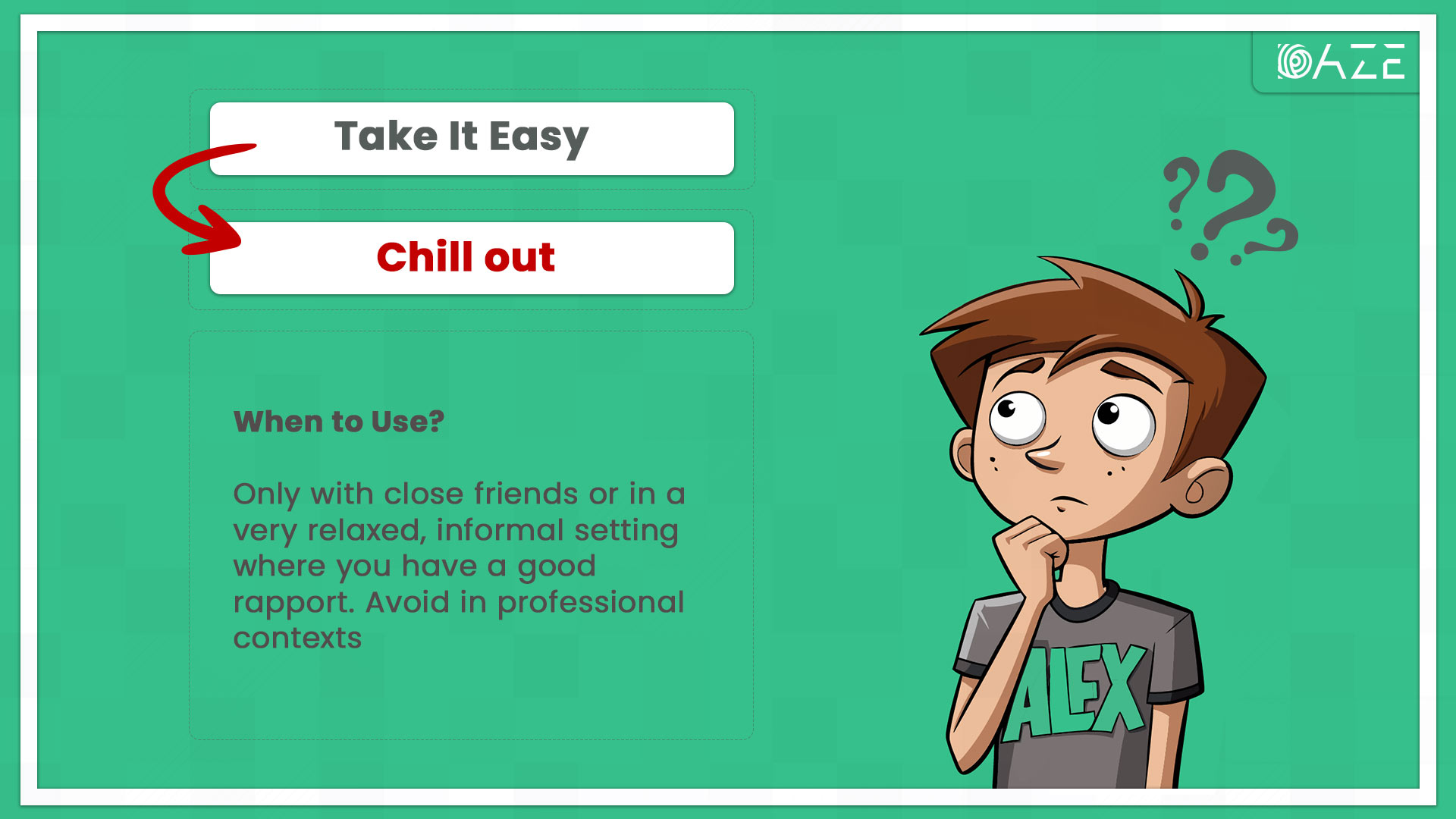
20. “Chill out.”
- Explanation & Nuance: This is a very informal and casual phrase. It can be used playfully between friends, but can sound rude or dismissive in a professional or tense situation.
- When to Use? Only with close friends or in a very relaxed, informal setting where you have a good rapport. Avoid in professional contexts.
- Tone: Informal, casual, potentially dismissive.
- Example: “Hey, don’t worry so much about the game. Just chill out and have fun.”
21. “Simmer down.”
- Explanation & Nuance: This phrase is typically used to tell someone who is angry or overly excited to become calmer. It can be perceived as condescending, so it should be used with care.
- When to Use? Cautiously, perhaps when trying to de-escalate a friendly argument or calm an overly boisterous friend. Very risky in a professional setting.
- Tone: Directive, condescending, parental.
- Example: (Used playfully) “Alright, I know you’re excited about the concert, but simmer down! You’re going to spill your drink.”
22. “Count to ten.”
- Explanation & Nuance: This is a classic technique for anger or frustration management. Suggesting it to someone is a way of advising them to pause and collect themselves before reacting.
- When to Use? In a tense moment when someone is about to react out of anger or frustration. It can be helpful but also feel patronizing depending on the tone.
- Tone: Calming, methodical, potentially patronizing.
- Example: “I can see you’re really angry about that email. Maybe count to ten before you write a reply.”
23. “Stay cool.”
- Explanation & Nuance: A casual, “cool” way to say “remain calm,” especially under pressure. It has a slightly detached, effortless vibe.
- When to Use? When encouraging someone to handle a potentially stressful situation with composure and confidence.
- Tone: Casual, cool, confident.
- Example: “There are going to be some tough questions in this meeting. Just stay cool and stick to the facts.”
24. “Don’t work too hard.”
- Explanation & Nuance: A common and friendly sign off, especially at the end of a workday. It’s a polite way of acknowledging that the person works hard while encouraging them to rest.
- When to Use? As a casual farewell to colleagues on a Friday afternoon or before a holiday.
- Tone: Friendly, respectful, casual.
- Example: “Have a great weekend! Don’t work too hard.”
25. “Find your calm.”
- Explanation & Nuance: A mindful and introspective phrase. It suggests that calmness is an internal state that can be found, rather than something that happens externally. It’s empowering and modern.
- When to Use? For someone who is feeling internally chaotic or anxious. It’s a good phrase for encouraging mindfulness.
- Tone: Mindful, introspective, empowering.
- Example: “The office is so hectic right now. Take a minute to find your calm before the next meeting.”
26. “Hang loose.”
- Explanation & Nuance: An extremely informal, laid back phrase associated with surf culture. It means to be relaxed and not worry. It’s best reserved for very casual situations.
- When to Use? With friends in a completely non professional environment.
- Tone: Laid back, informal, niche.
- Example: “No worries about being a few minutes late. Hang loose.”
27. “Rest up.”
- Explanation & Nuance: A slightly more active and informal version of “get some rest.” “Up” adds a sense of completion, as in “fuel up” or “load up.” It’s a friendly encouragement to rest fully.
- When to Use? When you want to encourage someone to rest in preparation for something, like a big event or returning to work after being sick.
- Tone: Encouraging, informal, active.
- Example: “I hope you rest up this weekend so you feel 100% on Monday.”
28. “Take it one step at a time.”
- Explanation & Nuance: This is excellent advice for someone who is feeling overwhelmed by the size of a task. It breaks the problem down into manageable pieces and reduces anxiety about the future.
- When to Use? When a colleague is looking at a huge project and doesn’t know where to start.
- Tone: Methodical, calming, encouraging.
- Example: “I know launching a new product is a lot. Let’s just take it one step at a time, starting with the market research.”
29. “Easy does it.”
- Explanation & Nuance: A classic phrase that advises caution and a slow, careful approach. It’s often used when someone is performing a delicate physical or metaphorical task.
- When to Use? When someone is being physically careful (e.g., carrying something heavy) or when they are navigating a sensitive conversation.
- Tone: Cautionary, gentle, slow.
- Example: “You’re getting close to a solution, but this is a tricky bit of code. Easy does it.”
30. “You’ve got this.”
- Explanation & Nuance: While not a direct synonym, this phrase often works better. Instead of telling someone to calm down, it expresses confidence in their ability to handle the situation, which can be more empowering and calming than being told to relax.
- When to Use? When someone is expressing self doubt or anxiety about a challenge ahead.
- Tone: Empowering, confident, supportive.
- Example: “I’m really nervous about this presentation.” “Don’t be. You know the material inside and out. You’ve got this.”
Master Your Vocabulary, Master Your Connections
Learning different ways to say “Take it easy” is more than just a vocabulary exercise; it’s a powerful tool for building stronger relationships and communicating more effectively. Remember Alex? The next time a colleague, Mark, was visibly stressed about a tight deadline, Alex paused. Instead of his old, generic phrase, he said, “I can see you’re under a lot of pressure. Remember to pace yourself, and let me know if I can help with anything.” Mark looked up, the tension in his shoulders easing slightly. “Thanks, Alex. I appreciate that.” Alex had not only offered comfort, but also support and understanding. He didn’t dismiss the stress; he acknowledged it and showed he was an ally.
When you choose a word that accurately describes the specific nature of your feelings, whether it’s encouraging rest, advising caution, or expressing confidence, you define the moment with greater clarity for yourself and others. With these 30 alternatives in your toolkit, you can add depth and insight to your daily interactions. The next time you find yourself in a situation that calls for it, you’ll have the perfect words to make your message count.